.png)
As the year comes to an end, KIT would like to sincerely express our heartfelt appreciation to all participants of the KIT study, including teachers, parents, and children. Thank you for being part of this journey and for allowing us to grow alongside your children. We wish you a joyful New Year and good health for you and your family.
This edition features a range of engaging topics. It presents a brief overview of the Future of Families & Child Wellbeing Study (FFCWS), a longitudinal research project launched between 1998 and 2000 that tracks nearly 5,000 children born in large U.S. cities, with about three-quarters born to unmarried parents. Other highlights comprise key KIT findings on children’s allergies and how parents manage these conditions, an exploration of the roles of contactors and follow-up interviewers in the KIT project, and a review of “Why Is the Sky Blue?”, a storybook by Sally Grindley and illustrated by Susan Varley, exploring mutual learning between generations.
.png)
Future of Families & Child Wellbeing Study (FFCWS)
The Future of Families & Child Wellbeing Study (FFCWS) is a longitudinal research project launched in 1998. It is funded by various U.S. government agencies, such as the National Institute of Child Health and Human Development (NICHD), along with private foundations. The project is jointly conducted by the Center for Health and Wellbeing at Princeton University and the Population Research Center at Columbia University. It tracks nearly 5,000 children born between 1998 and 2000 in large U.S. cities with populations exceeding 200,000. Approximately three-quarters of these children were born to unmarried parents. The study's sample is representative of newborns in large cities, with the majority consisting of Black and Hispanic children from low-income, disadvantaged families. FFCWS has collected data in seven waves at key stages of children's lives: at birth, and around ages 1, 3, 5, 9, 15, and 22. The study surveyed mothers, fathers, primary caregivers, children (starting at age 9), early childhood educators, and teachers. The data collected includes various aspects such as family background (e.g., whether the father has been incarcerated, parental depression, or neglect of child care), socio-economic status (e.g., community environment, crime and violence rates), medical records of family members, physiological data, parents' employment status, religious beliefs and behaviors, education and schooling, cognitive and social-emotional development, and daily diary written by teenagers. A smaller subset of the sample underwent in-depth interviews to explore the impact of the family environment on children's academic performance and experiences of poverty.
The physiological data collected by FFCWS spans multiple stages. At age 9, genetic information, such as saliva samples, was collected from children and their primary caregivers. At age 15, saliva samples were collected again. At ages 15 and 22, additional physiological data were gathered, including brain MRI scans, cortisol levels, hair, blood, and saliva samples, as well as sleep data. The study examines the relationship between these physiological markers and depression and stress. At age 22, data on cardiovascular health (e.g., carotid ultrasound and blood lipids), diet, and exercise habits were also collected. Additionally, the study collected data from teenagers’ digital diaries. At age 15, participants completed biweekly surveys via a mobile app or online platform, answering questions about their family situation, friendships, romantic relationships, emotions, schooling, substance use, daily time management, and future expectations.
For more information about FFCWS, please visit the official website: https://ffcws.princeton.edu/.
KIT Findings on Child Development
As winter arrives, many children with allergies begin to experience familiar symptoms like sneezing and runny noses. For parents, this can be a particularly challenging time as they navigate how best to ease their children’s discomfort and keep symptoms under control. According to statistics from the Ministry of Health and Welfare, approximately 770,000 children aged 0 to 15 in Taiwan sought medical attention for allergies in 2019. Moreover, the number of children affected by allergies appears to be on the rise. According to the KIT-M36 survey on 6-year-old children, 30% experienced allergy symptoms in the past 12 months, with allergic rhinitis being the most common. Additionally, 11.5% required regular medication for their allergies. As atopic dermatitis, allergic asthma, and allergic rhinitis become increasingly common, parents can learn how to prevent and manage their children's allergies. They can provide a comfortable, allergen-reduced environment and follow doctors' recommendations to treat and control symptoms, helping their children reduce the frequency of allergic reactions.
The survey also found that children's allergies can have a significant impact on their parents. Compared to those whose children do not have allergies, parents of allergic children are more likely to feel short-handed at home. Mothers of allergic children often devote more effort to helping them develop good habits, supporting their learning, offering care, and responding to their needs. However, despite their dedication, these mothers are also more prone to feeling sad, depressed, or unhappy. This highlights the importance of parents prioritizing their own emotional well-being and personal needs while caring for their children. In families with allergic children, cooperation and emotional support among family members are crucial in fostering a nurturing and supportive environment for both the children and the family as a whole.

Faces Behind KIT
The KIT project uses telephone interviews as one of its primary data collection methods, with contactors and follow-up interviewers playing a key role. Their professionalism and proficiency directly affect the accuracy of the data and the overall smoothness of the interviews. That’s why the KIT project places great importance on the recruitment and training of these personnel.
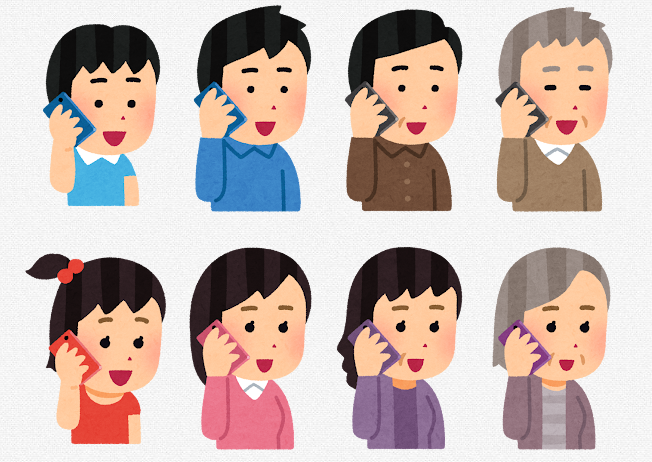
To meet the demands of each stage of the survey and to ensure high-quality telephone interviews, the KIT project includes assessments in Chinese typing, computer skills, and Taiwanese Hokkien communication during the recruitment process. Candidates are also evaluated on their verbal communication and problem-solving abilities. Only those who meet the standards are eligible to become contactors or follow-up interviewers for the project.
Follow-up interviewers play a crucial role in ensuring the completeness and accuracy of survey data. They are responsible for contacting respondents to fill in any missing answers and to clarify responses that are inconsistent or illogical. In addition to strong communication skills, follow-up interviewers must be able to quickly understand and interpret the content and logic of the questionnaire. Therefore, training emphasizes their grasp of the questionnaire’s structure and logic, as well as their ability to apply it effectively. Moreover, follow-up interviewers are also tasked with reviewing the interview process to ensure that it complies with the standards set by this project.
Contactors are essential to the smooth execution of the KIT project, too. They are responsible for identifying the correct interviewees, confirming their eligibility to participate in the survey, and conducting telephone interviews with those who are unable to complete the survey in person or online. To carry out these tasks effectively, contactors must be thoroughly familiar with the project's interview procedures, questionnaire content, and the operation of the survey system. The training provided to interviewers covers a wide range of topics, including an overview of the KIT project, interview procedures, questionnaire content, the survey system, communication techniques, hands-on practice, and project guidelines. Through comprehensive training and practical exercises, contactors are well-prepared to operate the survey system with confidence and respond to interviewees effectively, demonstrating the professionalism required for their role.
Children’s Book Review
“Why Is the Sky Blue?” is written by Sally Grindley and illustrated by Susan Varley, a book follows an inquisitive Rabbit who constantly questions his surroundings, while his elderly friend, Donkey, has grown indifferent. Rabbit wants to know why the sky is blue, and Donkey, who knows a lot, promises to teach him—but somehow never quite gets round to it. Through their journey together, Donkey rediscovers the joy of curiosity, highlighting the beauty of mutual learning between generations. Its English version is available on Amazon (https://www.amazon.com/dp/184270589X), and readers can find its Chinese version on Books.com.tw (https://www.books.com.tw/products/0010945557). You can listen to the story by clicking on this link: https://youtu.be/VEoVcEGVt_c.